


Beyond a Day: Why MLK Day and Black History Month Still Matter in 2026

Updated: Mar 28
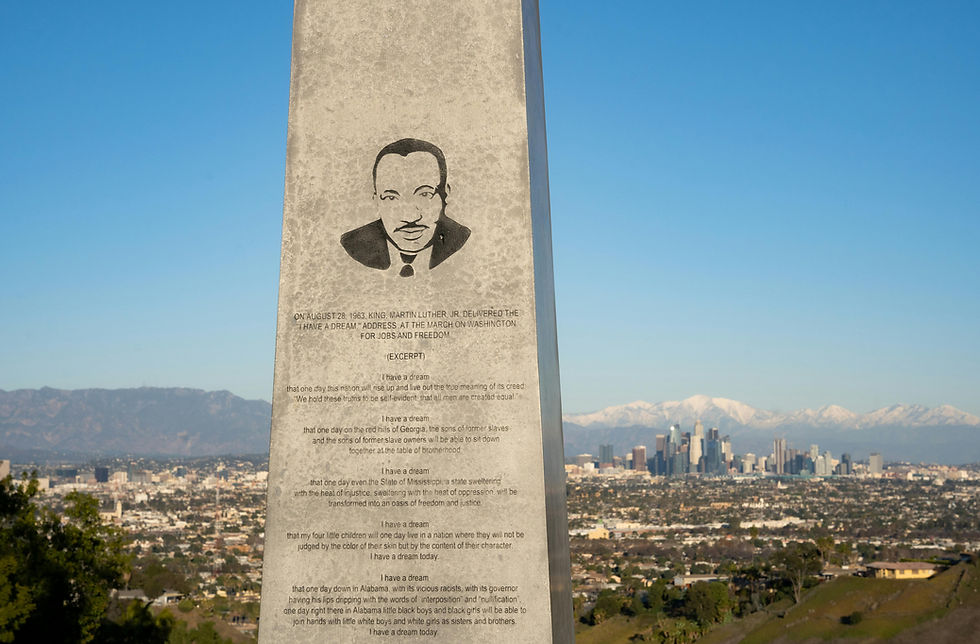
As 2026 begins, we ask: How do we keep the relevance of Martin Luther King Jr. Day and Black History Month? While these remain core cultural and leadership observances, political and institutional forces seem to be working at reducing their significance. These events were born from historic struggles against segregation, disenfranchisement, and systemic racism in the United States, and later embraced in Canada.
MLK Day commemorates the life and legacy of a leader whose work reshaped civil rights policy and public consciousness. Black History Month Canada celebrates generations of contributions by Black scholars, artists, activists, and communities.
In recent years, however, parts of the U.S. federal government have paused or limited celebrations tied to history and culture after executive orders rolling back diversity, equity, and inclusion (DEI) programs. A 2025 memo from the Defense Intelligence Agency reportedly paused observances of Martin Luther King Jr. Day, Black History Month, and other cultural remembrance activities.
In Canada, observance continues with official support. The government announced the 2026 theme for Black History Month: “30 Years of Black History Month: Honouring Black Brilliance Across Generations,” and committed funding for Atlantic Region heritage projects. Yet uptake varies across provinces; Eastern Canada shows continuity in celebration, while some regions, such as Alberta, reflect slower or uneven adoption.
In this political context, leaders face a choice: treat these observances as symbolic gestures or recognize them as sustained commitments to ethical leadership, racial literacy, and workplace inclusion.
Table of Contents:
Institutional Reactions and Strategic Pivots
Across sectors and organizations, we’re seeing corporate DEI shifts in 2026. Some have quietly dropped the term “DEI” or apply diversity reframing by using neutral corporate values language like “culture and belonging.” Others have trimmed resources for race-specific observances without clear alternatives.
Limiting observances often signals an attempt to avoid political conflict, but it also sends a message to employees about whose history and experiences are valued. When federal agencies reportedly paused events like Martin Luther King Jr. Day and Black History Month in response to a directive to end DEI programs, some workers expressed confusion and concern, citing unclear guidance on balancing new policy with past commitments.
For Black employees and Black Canadian colleagues, these shifts can affect trust and morale. Race-specific observances are a recognition of lived experience and ongoing systemic inequities. Removing or minimizing them without substantive strategies to address inequity increases the risk of alienation among team members whose histories and contributions are made invisible.
In global teams, this dynamic can translate into disengagement, diminished psychological safety, and reduced retention among employees who feel unseen.
Institutional diversity reframing, if it preserves substance while changing labels, can be effective. However, when observances are dropped without replacement actions, trust erodes. Leaders with cultural intelligence (CQ) recognize this and respond by anchoring observances in values.
Media Distortions and Misappropriated History
Absent cultural intelligence, public narratives about civil rights history can be distorted in ways that dilute meaning, leading to the misappropriation of civil rights symbolism.
A striking 2025 example involved the Charlie Kirk-MLK comparison by conservative activists following the former’s death. Comedian Dave Chappelle called such comparisons “a reach,” noting that similarities between the two men effectively end with both being murdered. The controversy highlighted a deeper problem: without cultural context, public discourse can strip civil rights history of both its moral core and its specificity.
For leaders and educators, these misappropriations are cautionary examples. They show how poorly framed public comparisons and talking points, unanchored in civil rights history literacy, can create confusion and division. Leaders with cultural intelligence push back by grounding discussions in history and creating space for critical engagement.

How Leaders Can Observe Authentically
Authentic observance starts with clarity about purpose. MLK Day and Black History Month must be distinct from general workforce culture days or generic diversity events. Their focus on specific histories and racial justice gives them power and relevance.
If you’re a leader seeking to promote sincerity over tokenism:
Do commit to education. Organize talks, panels, or curated resources that centre Black voices and scholarship on civil rights history and contemporary issues. Map these to organizational objectives around collaboration, psychological safety, and inclusion.
Do provide authentic support for the Black community through leadership and visibility. Encourage contributions from Black employees in shaping observances, but don’t place the burden on them to educate others.
Don’t conflate observances with broad “culture days.” Race-specific history has a different purpose than general employee celebrations or random motivation events.
Don’t reduce observance to statements of solidarity without action. Words matter less than sustained actions like policy reviews, mentoring programs, and data-informed race-focused diversity strategies that address bias in hiring or advancement.
In Canada’s diverse regions, leadership for multicultural teams means acknowledging local history and context. While Eastern Canada has a long track record of Black History Month celebrations and heritage projects, other regions may require more intentional outreach and community partnerships as part of observances.
Leadership Lessons and Cultural Intelligence
Ethical leadership and MLK’s legacy go well beyond commemorative speeches. They provide cultural intelligence leadership lessons. They are a living leadership classroom, cultivating steadfast moral clarity, a commitment to justice through systems change, and the courage to stand against entrenched inequality. Cultural intelligence equips leaders to honour that legacy in practice.
CQ helps leaders make decisions that build trust within multicultural teams. Building organizational trust with CQ encourages reflection on how policies affect different groups, listening beyond surface agreement to uncover unseen impacts, and adapting communication to bridge differences.
Observing MLK Day and Black History Month with CQ is not about consensus on every political issue. It’s about acknowledging history, recognizing systemic inequity, and acting with empathy and accountability. In polarized environments, leaders who show this level of ethical clarity earn trust, strengthen psychological safety, and build a culture where diverse talent can thrive.
History, Culture, and Leadership Maturity
MLK Day and Black History Month remain essential in 2026 because they remind leaders that culture shapes performance, experience, and community. The observance of these events is an expression of ethical leadership and cultural awareness.
Leaders who approach these moments with intention, grounded education, and sustained action send a powerful message that diversity is not to be diluted by context, and that cultural intelligence matters to individuals and organizations.
Recognize history. Support the community. Act with purpose. That is how MLK Day and Black History Month continue to matter well into 2026 and beyond.


